 JP-MiniSynth
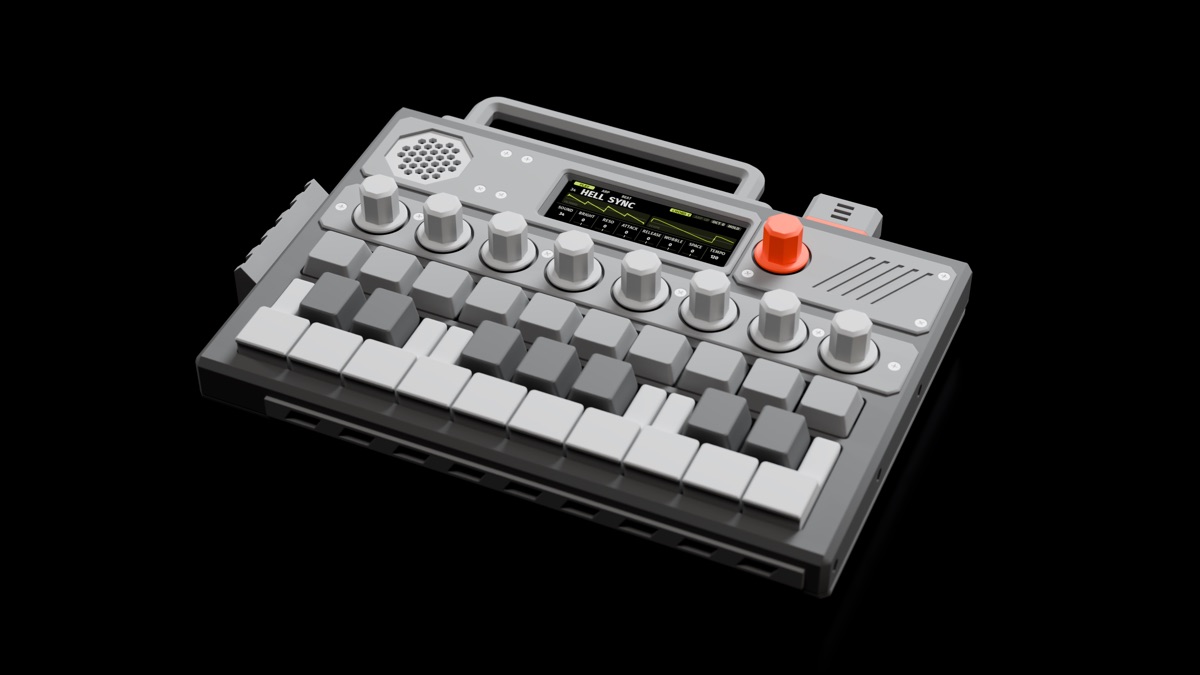
Portable 17-Key
Sonic Armament
JP-MiniSynth Cyber Edition
Primary17 magnetic keys / 39 sounds / 8 knobs and volume
SidearmJP-MIDIKey13 and JP-MIDIKey25 MIDI keyboards
© 2026 JunpeiWada
One fingertip can turn the tide.
How deep you press becomes your weapon.
Key Specifications
This unit fires sound, not bullets.
Cyber Edition
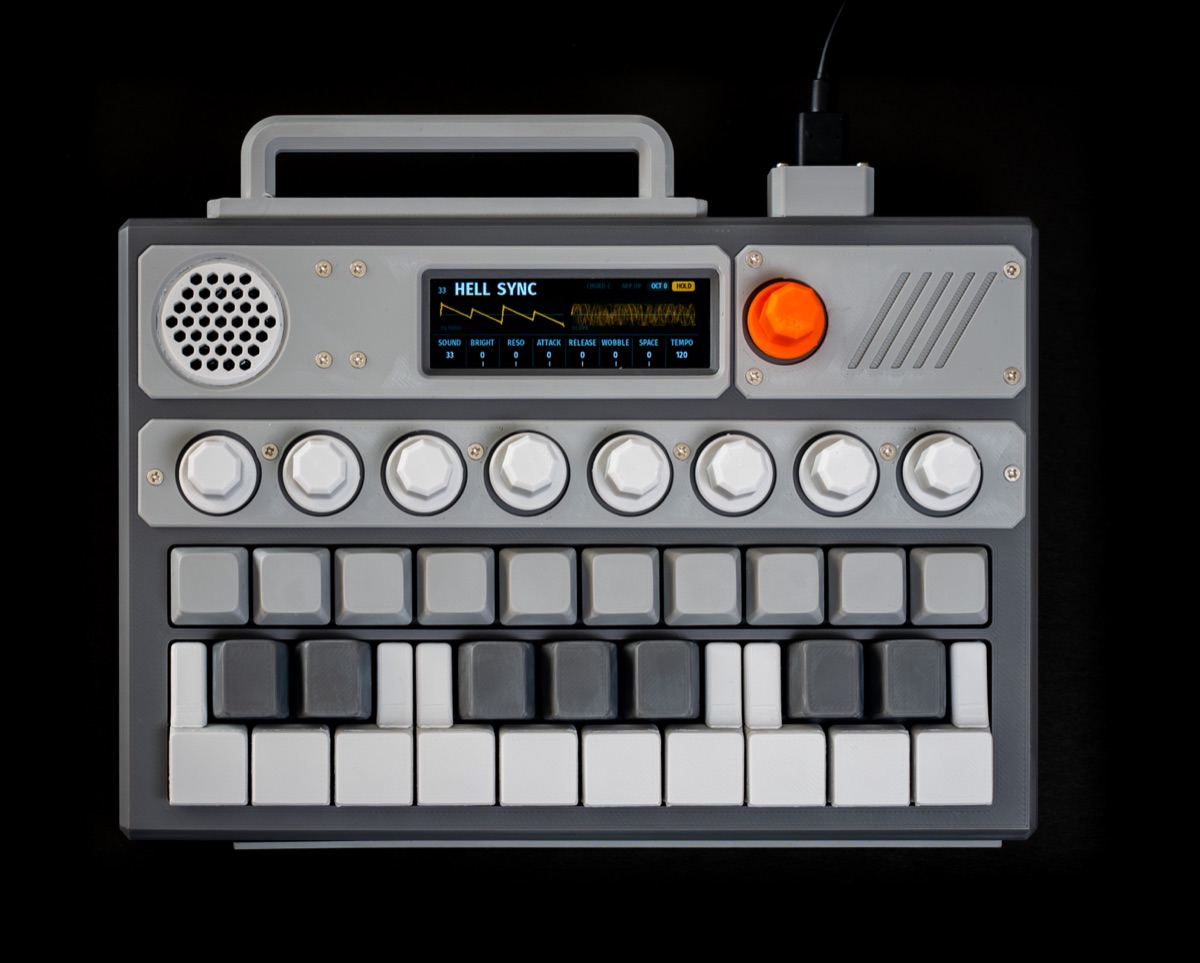
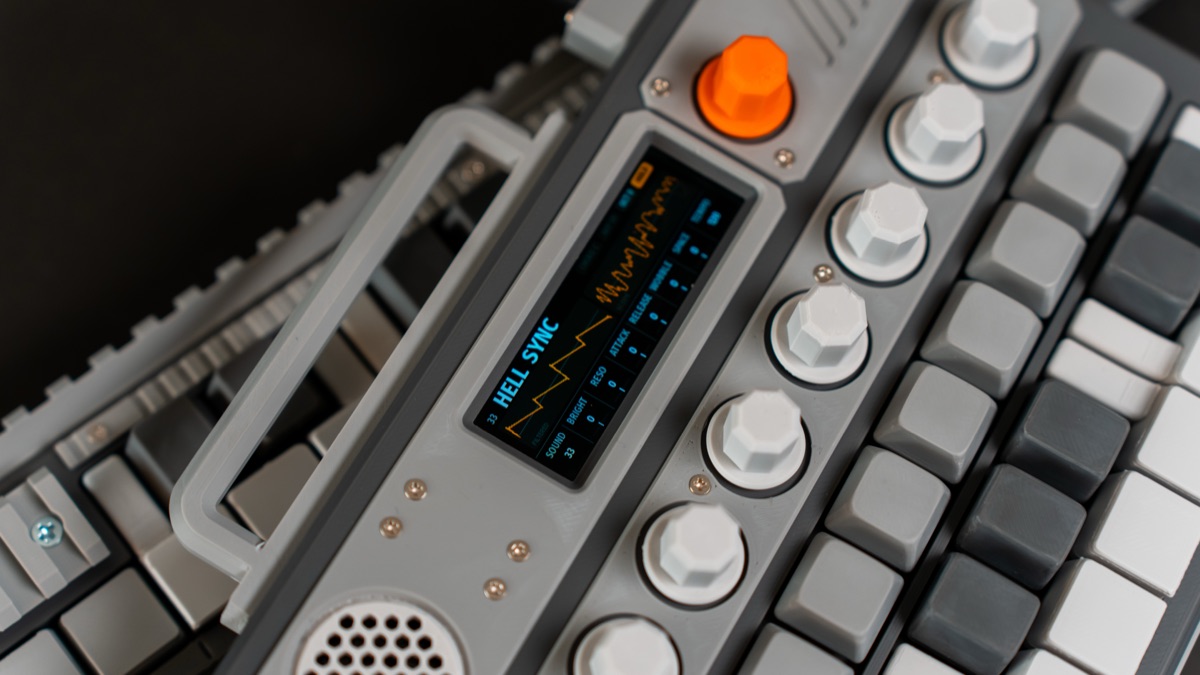
Identification color: orange.
Built for operation in the dark: the volume knob wears orange for identification, and the sound knobs are octagonal. You can tell them apart by touch.
MIDI Keyboards
Your sidearm, squared away.
The JP-MIDIKey13 and JP-MIDIKey25 are MIDI keyboards with the same magnetic keys as the JP-MiniSynth. They carry no sound engine of their own: connect over USB or Bluetooth and operate with the sounds of the connected device. On an iPhone or iPad, JPSoundEngine can play them.
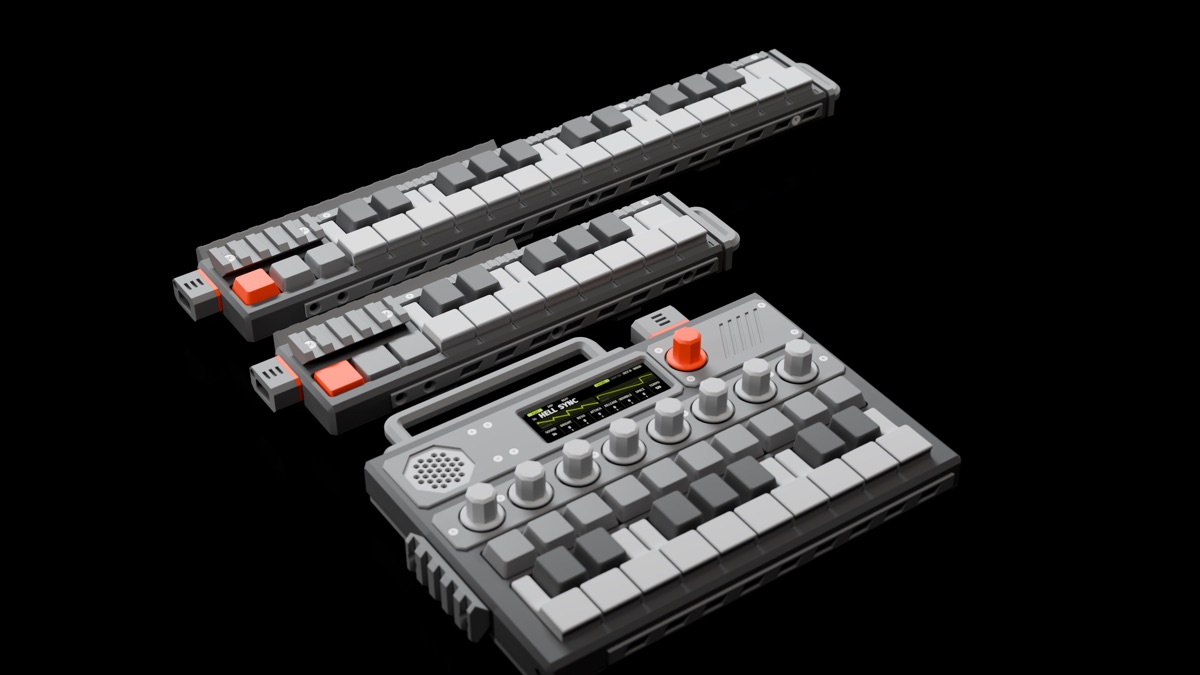
JP-MIDIKey13
A 13-key MIDI keyboard that is easy to take anywhere.
- Keys
- 13 magnetic keys, C4–C5
- Function keys
- OCT−, OCT+, SUSTAIN
- Interface
- USB-C (USB MIDI), Bluetooth MIDI
- Dimensions
- 254 × 66mm
JP-MIDIKey25
A 25-key MIDI keyboard with two full octaves.
- Keys
- 25 magnetic keys, C3–C5
- Function keys
- OCT−, OCT+, SUSTAIN
- Interface
- USB-C (USB MIDI), Bluetooth MIDI
- Dimensions
- 387 × 66mm
These are in-development specifications and may change.
Expression
Compact.
Highly expressive.
The key switches are magnetic and read how deep each key is pressed, continuously. The sound keeps moving with your finger after the note starts. Depth gives a small keyboard a wide range of expression.
Strike velocity
EP KEYS, basses and others: play hard for loud, softly for quiet. The keys read how fast you press, so it feels like a normal keyboard.
Press depth
20 sounds, including leads and pads, sound in full at the bottom of the key. Lift your finger and they get quieter and darker, one note of a chord at a time.
Wind
TRUMPET, TENOR SAX and CLARINET are physically modeled winds. Key depth becomes breath, so you can phrase as if you were blowing.
Sounds
Pick one.
Turn a little.
The 8 knobs always do the same job. There are no pages of detailed settings: everything you shape the sound with is under your hand. Choose from 39 sounds and change them a little as you play. Turn on CHORD and ARP, and a single key plays an arpeggiated chord in your key.
- SOUND
- BRIGHT
- RESO
- ATTACK
- RELEASE
- WOBBLE
- SPACE
- TEMPO
- WARM PAD
- SUPER SAW
- SUB BASS
- SOFT LEAD
- GLASS BELL
- DRAWBAR ORG
- STRINGS
- PLUCK
- EP TINE
- CHOIR AH
- BRASS
- WIND FX
- BREATH LEAD
- TRUMPET
- TENOR SAX
- CLARINET
- GYUN LEAD
- SYNC LEAD
- SEQ RIFF
- RAVE STAB
- DIGI KEYS
- STRAIGHT
- SHINY LEAD
- SYNTH BRASS
- SYNTH BASS
- ACID BASS
- FAT BASS
- SEQ BASS
- SWELL PAD
- BOW STRINGS
- DEPTH SYNC
- BEND KEYS
- PAD BASE
- HELL SYNC
- SYNC SWARM
- CHAOS GROWL
- SIREN
- BP SCREAM
- SYNC BASS
Sounds that respond to depth or breath
Inside
From the board
to the sound.
The board, the case, the keycaps and the sound engine software are all my own work. The microcontroller is an ESP32-S3.
Sound passes through a DAC and an amplifier and comes out as analog: the built-in speaker, headphones or line out.
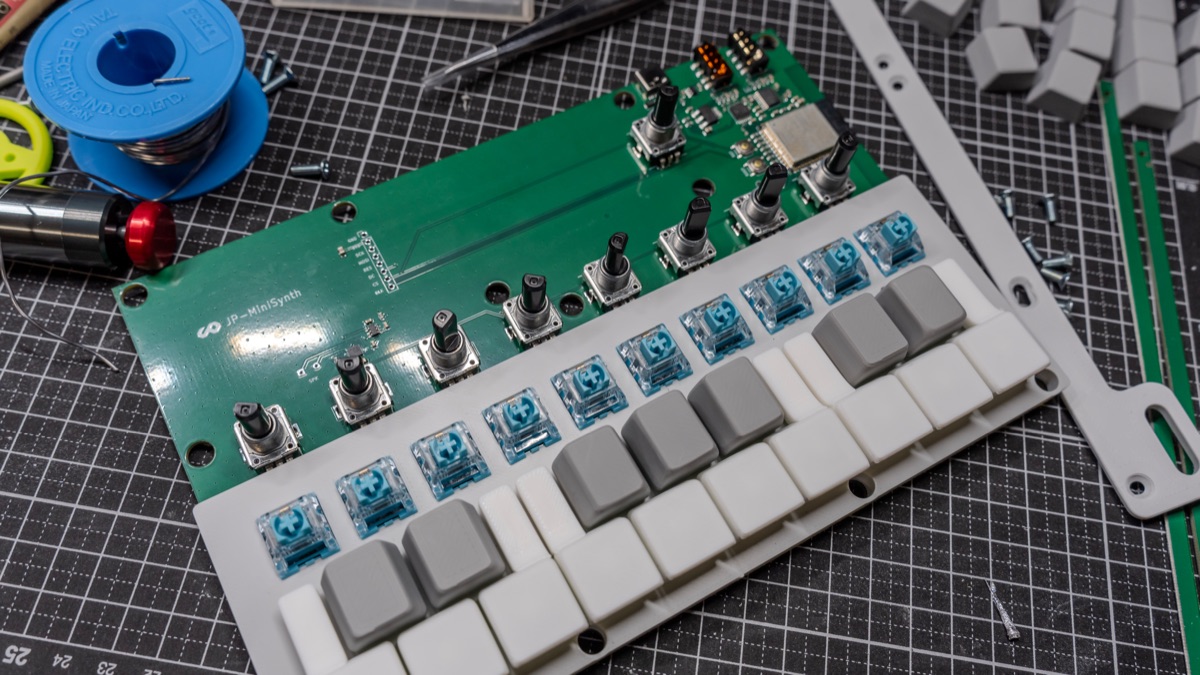
Specifications
- Keys
- 17 MX-compatible magnetic (Hall effect) keys, C4–E5OCT± shifts by one octave. Velocity and aftertouch
- Sound engine
- 39 sounds, up to 8 voicesLayered sounds use fewer voices; some sounds are monophonic
- Chord and ARP
- Chords in 24 keys, 11 arpeggiator patterns
- Knobs
- 9 detented rotary encoders (8 for sound, 1 for volume)
- Function keys
- 10 MX Brown
- Display
- 2.79-inch IPS color LCD (428 × 142)
- Audio out
- Built-in speaker, 3.5mm headphones, 3.5mm line
- Connection and power
- USB-C (USB MIDI, bus power)
- Microcontroller
- ESP32-S3
These are in-development specifications and may change.
See it in person
Deploying to NT Nagoya 2026.
The Cyber Edition will be on display too. Sales details will be announced once decided. If you are interested, feel free to reach out on X.
Message @junpeiwada